
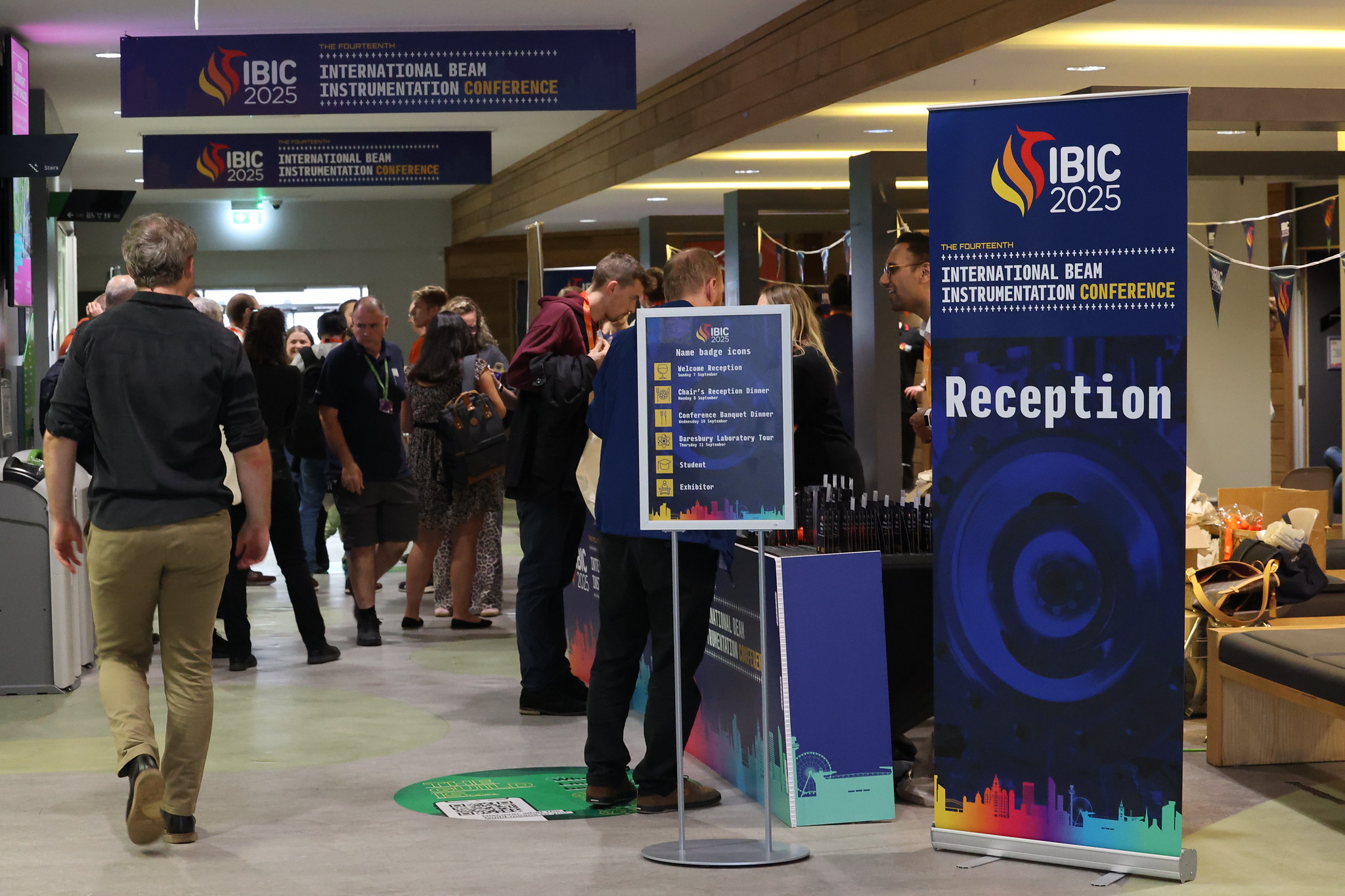
This year’s edition of the International Beam Instrumentation Conference (IBIC) recorded its largest ever turnout in Europe, with over 300 experts from around the world in attendance.
IBIC is dedicated to exploring the physics and engineering challenges of beam diagnostic and measurement techniques for particle accelerators worldwide.
The IBIC series rotates on a triennial basis among three regions: Europe, the Middle East and Africa, the Americas, and Asia and Australia.
The 14th edition, which ran from September 7 – 11 this year, was hosted by the University of Liverpool, together with the UK’s Science and Technology Facilities Council (STFC), the Cockcroft Institute and the John Adams Institute.
Over the course of the week, delegates took part in keynote and invited talks, contributed presentations, participated in an industry exhibition and were able to see and discuss more than 200 scientific posters.
Distinguished speakers included the University of Liverpool’s vice-chancellor Tim Jones, renowned physicist Dame Jocelyn Bell Burnell, Mark Thomson, the next director-general of CERN, Tom Shea, section leader of beam diagnostics at the European Spallation Source in Sweden, and Benjamin Rienacker, physics coordinator of the AEgIS experiment at CERN.
Beam instrumentation plays a vital role in advancing particle accelerator science and its applications. Without a comprehensive set of sensors and monitors, accelerators and light sources could simply not be operated, let alone optimised. International collaboration is key to push technologies beyond current limits, and IBIC 2025 offered a fertile ground for discussions.
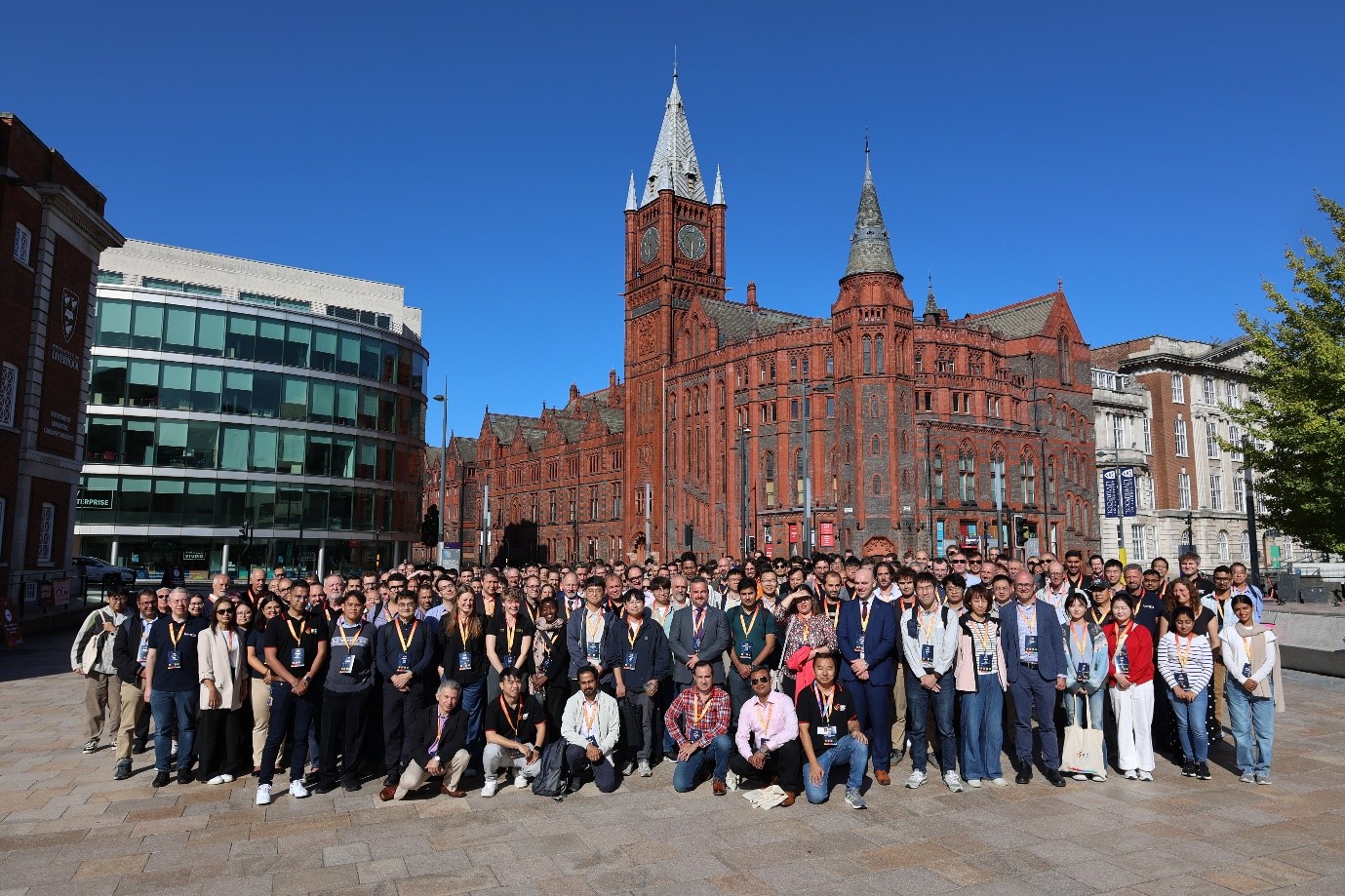
Carsten P. Welsch, head of accelerator science at the University of Liverpool and Chair of IBIC 2025, said, “Hosting IBIC 2025 in Liverpool allowed us to shine a spotlight on the latest beam instrumentation advances, and to strengthen the international collaborations that drive real progress in beam diagnostics, medical accelerators, and frontier physics.
“It was wonderful to have such engaged discussions with research leaders from around the world,” he added.
A highlight of the conference was the talk by Bell Burnell about her academic career. Bell Burnell, who co-discovered pulsars in 1967, is a vocal advocate for women and minority groups in physics. The discovery of radio pulsars in 1967 earned a Novel Prize in Physics in 1974, but Bell Burnell was not among the awardees. The talk was followed by a panel discussion on innovation and inclusion in instrumentation science.

A tour of Daresbury Laboratory took place for delegates after the end of the main conference. The tour included visits to the advanced electron accelerator test facility CLARA, as well as various other areas including the superconducting RF test facility and the vacuum lab.
In parallel to the conference, the University of Liverpool has played host to the Code of the Universe [AW1] travelling exhibition. This interactive exhibition gives an exciting insight into the science and technology of particle physics and accelerators.
IBIC 2025 chair Welsch said that the success of this year’s event was thanks to the “hard work of the scientific programme and organising committees, as well as the support of exhibitors, sponsors and partner institutions”.
Photos from the event, interviews, proceedings and much more information can be found on http://www.ibic2025.org.
Related reading: Training the eyes of an accelerator: CAS Beam Instrumentation Course in Split