
The Beam Gas Curtain (BGC) monitor has recently been established as an important addition to the beam instrumentation baseline for the High Luminosity era of the Large Hadron Collider (HL-LHC) at CERN, marking another success for the international collaboration between the University of Liverpool, CERN, and the GSI Helmholtz Centre for Heavy Ion Research.
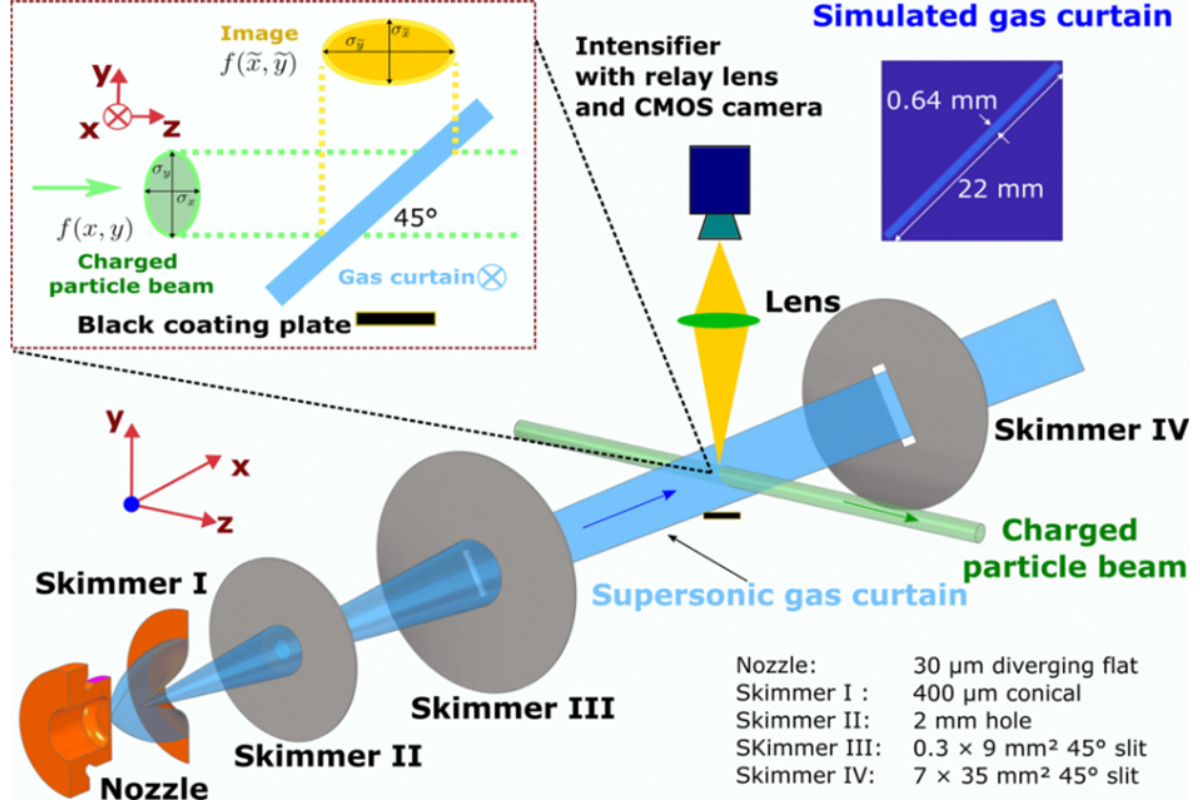
The BGC monitor produces two-dimensional images of a charged particle beam using beam-induced fluorescence, which occurs when particles in the beam interact with a thin supersonic curtain of gas introduced by the instrument.
After more than a decade of development and refinement, researchers from the QUASAR Group based at the Cockcroft Institute in Liverpool, UK, have addressed one of the key challenges in cutting-edge beam diagnostics: measuring the properties of a very high-energy, high-intensity particle beam in a minimally invasive way.
A prototype BGC monitor was installed in the LHC during Long Shutdown 2 and the year-end technical stop in 2022. Its measurement capability was immediately demonstrated when LHC beams resumed operation in May 2023. Since then, the monitor has continuously measured beam profile and emittance throughout the full LHC operational cycle, including injection, energy ramp-up and stable beam operation. These results were recently published in Physical Review Research.
In October 2025, the BGC monitor was approved for full operational use in the LHC, representing roughly 2,000 hours of operation per year.
A review of transverse beam profile monitoring for the HL-LHC in September 2025 strongly endorsed the BGC project. Reviewers noted that, “the installation of a second BGC on Beam 2 is considered a valuable asset for the High Luminosity era (…) It could be considered to retrofit at a later point as well the prototype system on Beam 1".
Following this positive evaluation, the BGC monitor was approved as an important addition to the beam instrumentation baseline for the HL-LHC era in February 2026. “It’s a huge success and vindication of our work together for many years,” said Raymond Veness, deputy group leader of CERN’s Beam Instrumentation group, during the 12th BGC collaboration meeting in Darmstadt, Germany. “However, we now need to move ahead rapidly to produce the new instrument for the Long Shutdown 3 (LS3) schedule,” Veness, who is also the work package 13 leader for the HL-LHC project, added.
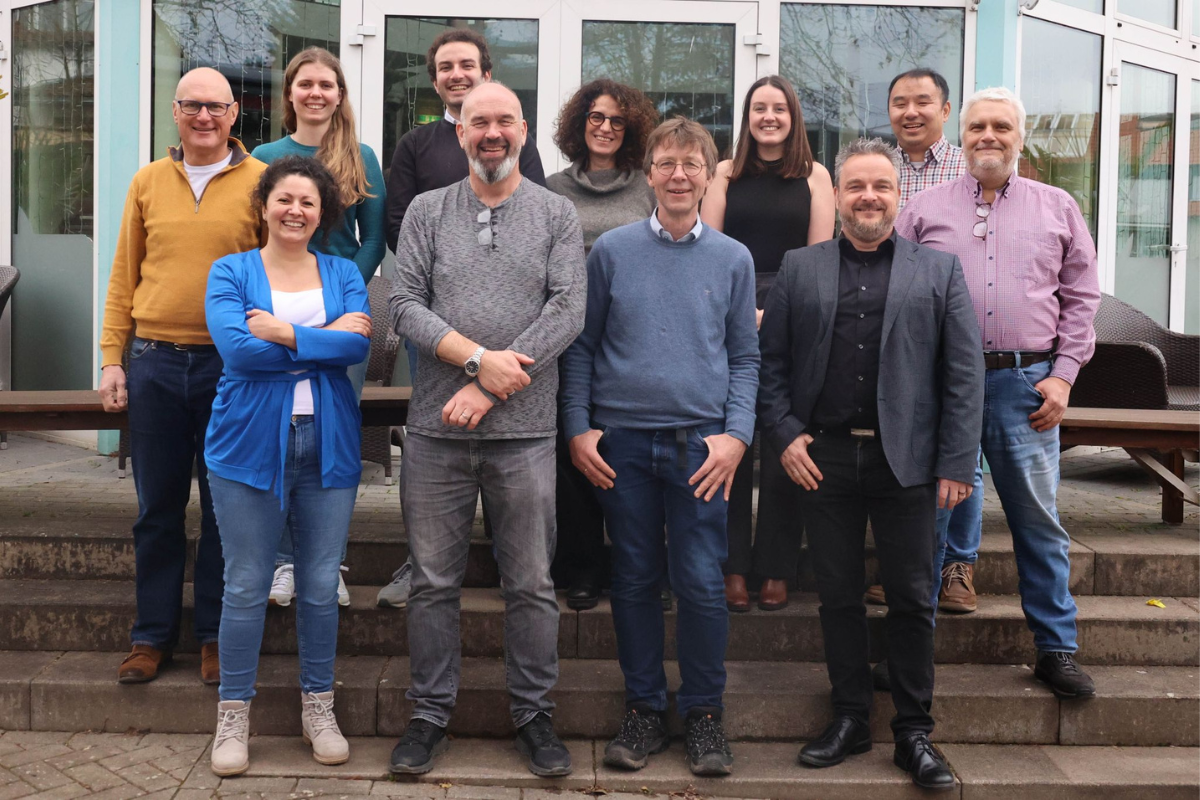
During the BCG meeting, collaborators reviewed the project status and discussed plans for system design, procurement, installation and testing ahead of LS3, which begins in June this year.
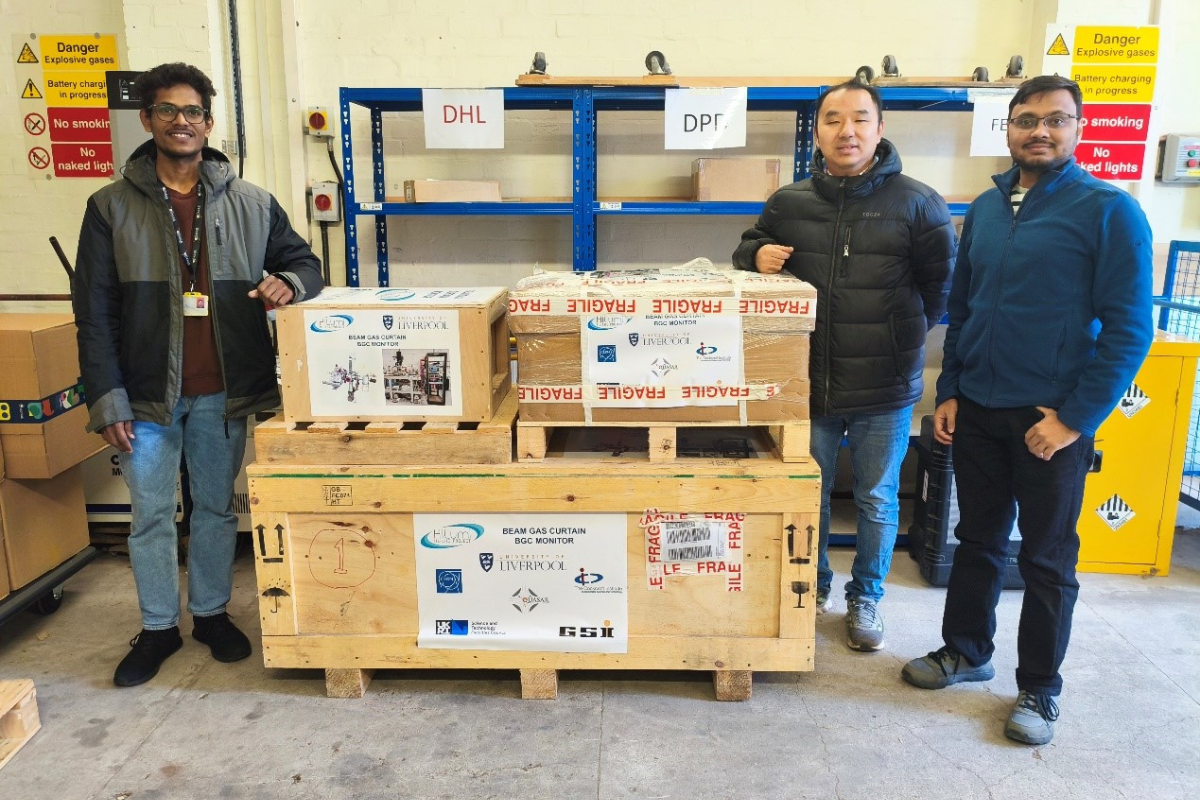
Following the collaboration meeting in February 2026, an upgraded version of the BGC monitor, designed for the characterisation of a large diameter hollow electron beam was successfully delivered to CERN, marking one of Liverpool’s final deliverables to the STFC-funded HL-LHC-UK project.
The monitor is capable of producing a larger and denser gas curtain, capable of covering beams of up to 60 mm in diameter. Procurement for the final device to be installed in LHC Beam 2 has now been completed. Installation and testing will follow once all components arrive at the Cockcroft Institute before the project concludes later this year.
“Developing each generation of the BGC monitor is almost like raising children,” said Hao Zhang, one of the project’s experts. “It is incredibly challenging but equally rewarding when you see them grow. We all feel honored to be involved in such an important scientific project.”
As the UK HL-LHC Phase II program approaches completion in March 2026, the collaboration is reflecting on the project’s long-term impact. “We should celebrate our tremendous achievement,” said Carsten P Welsch, head of the QUASAR Group, who has led the development of gas curtain monitors for nearly 20 years, speaking during the Institute of Physics UK-CERN Accelerator Celebration Day held on 27 November simultaneously at Daresbury Laboratory in Warrington, UK and at CERN. “From initial concept to realisation in the LHC, and through generations of PhD students and young researchers, the success of the BGC monitor demonstrates the value of sustained long-term investment.”
With its recent selection as a baseline instrument for HL-LHC and ongoing technological development, the BGC monitor has attracted growing international attention. The work has been presented at major accelerator conferences including IPAC’24, IBIC 2024, and HB2025.
Similar beam monitors are now being considered for other research facilities such as the European Spallation Source in Sweden, the Electron-Ion Collider in the United States, and medical accelerators where online beam monitoring offers distinct advantages over more traditional techniques.