
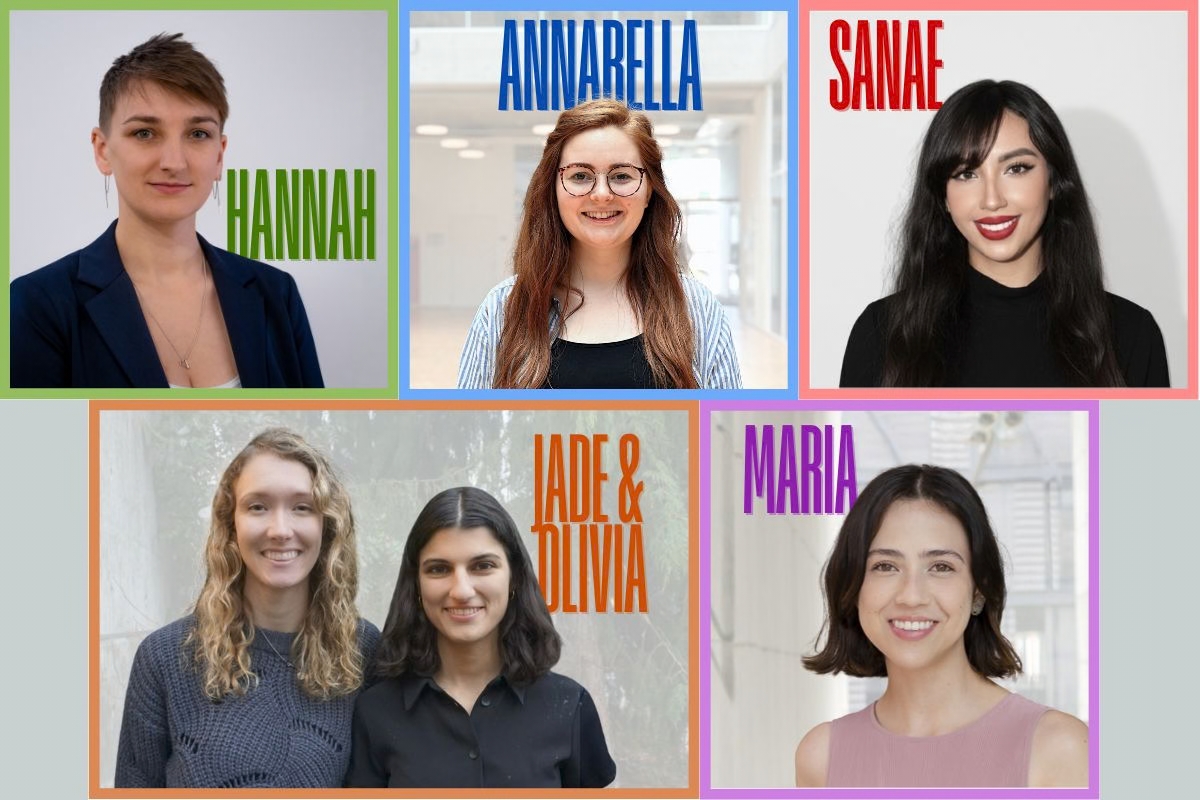
The International Union of Pure and Applied Physics (IUPAP) has announced the six winners of its new accelerator ambassadors initiative that will support young scientists in promoting engagement and education in the field of particle accelerators.
The winners, from diverse backgrounds around the world, will now spend the next year developing their projects, which cover topics ranging from sustainability, to medical applications, to African research infrastructures and social sciences.
The new initiative, coordinated by IUPAP’s Working Group 14 (Accelerator Science), was set up to support young scientists to use their experience and expertise to promote particle accelerator science. The four projects – one team consists of two members – have received seed funding of $1,000 to support their activities.
Alongside working on their projects, the ambassadors will be provided with training opportunities, skill development workshops, and networking events.
In this article, we speak to the newly appointed ambassadors to find out more about their projects, their careers, and how they envision the future of particle accelerator science.
Hannah Wakeling
Hannah is a postdoctoral research assistant in particle accelerator environmental sustainability at the John Adams Institute for Accelerator Science at the University of Oxford. They are originally from the UK but have spent a lot of time in Montreal, Canada, where they completed their PhD in particle physics.
What is your IUPAP ambassador project about and why did you choose this topic?
My project aims to shed light to the intersection of particle accelerators and environmental sustainability: how accelerators can help towards the wicked problem of the climate crisis, and how we as a community are increasingly working to reduce the environmental impact of our research. I will be taking interactive talks to schools, organisations and events, and compiling useful resources to help others discuss the topic in their own work.
We often speak of the medical, technological, scientific, sociological and economic benefits of particle accelerators, but hear far less about the efforts towards reduction of environmental impacts, both local and global, that contribute towards addressing the climate crisis. I believe this is a relatively little-known but promising and exciting topic to share with a wider audience.
How do you think being an IUPAP accelerator ambassador will help you, and will help others?
Being an IUPAP accelerator ambassador will help me further develop my communication skills, which can always be improved. It will also help me adapt my research for a wide range of audiences, which until now has been shared almost exclusively with scientists. I believe and hope that it will help people better understand what accelerators are, what they can do, and hopefully inspire confidence and interest in such an important and exciting field.
What are some challenges you’ve faced in your career, and what has been your experience of working and studying in the field of accelerator science?
One of the earliest challenges I faced, and still have to remind myself about, is asking questions. The sector is enormous, with such depth of knowledge and expertise that it can feel overwhelming and sometimes make you feel as though you don’t know enough. In reality, it’s impossible to know everything, and the only way you can learn is by asking questions. I have always been impressed by people’s niche areas of expertise, as well as their willingness to help and share their knowledge. I aim to embody that same openness in my own career.
Another challenge was moving countries and starting afresh. A piece of advice I once heard, and now live by, is that it can take up to two years to feel at home and have a local support network. That’s a long time not to feel rooted. My advice would be to get out there, join societies, maintain a good work-life balance, and look after yourself.
How do you see the future of accelerator-based science?
The future of accelerator-based science feels like it is at an important crossroads, particularly with the European Strategy for Particle Physics Update and the ongoing efforts to shape the next steps for the accelerator community. I’m excited to see where the future will take us, especially as accelerators provide such valuable services and are, ultimately, powerful tools for society.
Annabella Zamora
Annabella is a French PhD student at the University of Lausanne and a teaching assistant at EPFL. She has a background in computer science and sociology, and specialises in social studies of science and technology. She has also worked at CERN in the education and outreach group on the Science Gateway exhibition centre.
What is your IUPAP ambassador project about and why did you choose this topic?
My project is a podcast that aims to tell the stories behind accelerator science and technology. During my research, I conducted many interviews with people in very different roles, and I was fascinated by discovering the way science is actually done and all the processes and actors involved. The podcast builds on this experience and shares these stories to a broader audience. It is inspired by social studies of science and technology, which look at how scientific knowledge is produced collectively, through infrastructures, maintenance work, negotiations and everyday practices.
Coming from social studies of science and technology, and with a particular interest in practices such as maintenance and everyday work, I focus on the mutual shaping of science and society.
As part of my work, I conduct a lot of interviews, and I genuinely enjoy hearing people’s stories and observing their work. I think this is a meaningful way to connect to accelerator science and technology.
There are many excellent educational resources that explain the physics of accelerators, and I would not be the right person to teach physics. However, with the data I collected, and my research work, I can mediate between different groups with different interests, visions and concerns.
How do you think being an IUPAP accelerator ambassador will help you, and will help others?
I am really looking forward to collaborating with the other ambassadors and with the IUPAP working group. I think this will give me a broader perspective on accelerator science and technology by discovering new institutional and national contexts.
At the same time, I am happy to contribute by bringing a social science perspective into these discussions, especially on questions of scientific infrastructures, collaboration and public engagement.
What are some challenges you’ve faced in your career, and what has been your experience of working and studying in the field of accelerator science?
During my computer science training, I really enjoyed my computing classes. However, I struggled with mathematics and physics. I did not quite feel that it matched what I had imagined university studies would be like. I therefore decided to change direction and moved into sociology, where I became fascinated by studying norms, behaviours and institutions.
Later, when I came back closer to physics but this time from a social science perspective, it was sometimes difficult to feel legitimate in the room as a sociologist. I had to defend my methodologies and explain my approach. In the end, this was very fruitful, as it trained me to interact across disciplines and to translate between different professional cultures.
How do you see the future of accelerator-based science?
From a sociologist’s perspective, the future of accelerator-based science is not only a scientific or technical matter, but also a societal one. From my experience in collaborative initiatives such as the I.FAST Challenge Based Innovation events, I believe that the future of accelerator-based science needs stronger collaboration across disciplines and institutions, including social sciences.
With proper mediation and spaces for dialogue, many complex issues can be addressed more collectively. I think participation, interdisciplinarity and attention to everyday practices will play an important role in shaping the next phase of accelerator science.
Sanae Samsam
Sanae is an accelerator physicist from Morocco currently working as a postdoctoral researcher at INFN in Italy. Her work focuses on beam dynamics, RF cavities, and compact light source development, with strong involvement in international collaborations and African scientific initiatives.
What is your IUPAP ambassador project about and why did you choose this topic?
My IUPAP Ambassador project aims to promote accelerator science in Africa by advocating for the development of compact light sources as a stepping stone toward a future African Light Source. The project combines outreach, training, and strategic engagement with universities and policymakers to build local expertise in accelerator physics.
I chose this topic because I strongly believe that advanced research infrastructure is essential for scientific independence and innovation in Africa. Having experienced the impact of accelerator facilities in Europe and the US, I want to help create similar opportunities on the African continent.
How do you think being an IUPAP accelerator ambassador will help you, and will help others?
Being an IUPAP accelerator ambassador will strengthen my ability to connect global accelerator communities with emerging regions. This will give visibility to African initiatives and encourage young students, especially women, to consider accelerator science. For me personally, it expands leadership and outreach experience.
What are some challenges you’ve faced in your career, and what has been your experience of working and studying in the field of accelerator science?
Working abroad as a young scientist comes with challenges: adapting to new environments, proving oneself in highly technical fields, and navigating competitive research environments. However, accelerator science has also given me international exposure, hands-on experimental experience, and strong interdisciplinary collaboration opportunities.
How do you see the future of accelerator-based science?
The future is extremely promising. Accelerators are becoming more compact, efficient, and application-driven, serving medicine, materials science, energy, and environmental studies. I believe that the next frontier is expanding access globally, ensuring that regions like Africa actively contribute to and benefit from accelerator-based science.
Jade Fischer and Olivia Masella
Jade and Olivia are 4th-year PhD students in medical physics at the University of Victoria, Canada. Jade specialises in radiation therapy using very high-energy electrons (VHEE). She is investigating VHEEs through computer simulations, treatment planning studies, and experiments conducted at the CERN Linear Electron Accelerator for Research. Olivia is focused on the development of a novel low-cost radiotherapy device to increase access in low-resource settings such as low- and middle-income countries and rural regions.
What is your IUPAP ambassador project about and why did you choose this topic?
Our project targets school-aged children and aims to build public trust in radiation and accelerator-based medical technologies by highlighting their role in cancer diagnosis and treatment. The project will be an in-person single-day event featuring hands-on activity stations that cover external beam radiotherapy, brachytherapy, and CT imaging. Interactive and accessible content will help participants connect advanced technology to real-world cancer care applications. Each activity station, run by a graduate student volunteer, will emphasise the care that goes into delivering precise treatments and ensuring safety for patients.
We are passionate about changing public perceptions of radiation-based technologies. Throughout our education, we’ve come to realise how deeply rooted fear and misunderstanding of radiation are within the public. We want to contribute to demystifying this technology, highlighting the incredible advances made in recent decades, and sparking excitement by showcasing the many ways accelerators are used to improve health.
How do you think being an IUPAP accelerator ambassador will help you, and will help others?
We believe that, as future medical physicists, part of our role is to contribute to initiatives that build trust in science and promote public understanding of accelerator-based healthcare. With our strong foundation in both physics and clinical practice, medical physicists are well positioned to communicate this science clearly, meaningfully, and with impact. The IUPAP accelerator ambassador programme is an opportunity to pilot medical physics outreach in Canada and to begin building a culture of communication within our field. Our project will challenge us and our team of medical physicists and graduate students to consider how we talk to the public about accelerators and radiation.
What are some challenges you’ve faced in your career, and what has been your experience of working and studying in the field of accelerator science?
Like many young researchers, we deal with imposter syndrome. This has caused moments of uncertainty about our own skills, our project timelines, or how our work fits into the broader context of patient care. Progress isn’t always immediate, and there’s a constant balance between groundbreaking innovation and what is practical, safe, and implementable in a clinical setting. While that can be challenging at times, the work is genuinely rewarding, and the collaborative culture of the field makes it an exceptional place to learn and grow.
How do you see the future of accelerator-based science?
We see the future of accelerator-based science being shaped by rapid technological advancements that are creating exciting new opportunities. Each year, researchers are pushing boundaries by reducing the cost, physical footprint, and environmental impact of accelerators while at the same time expanding capabilities. These improvements are enabling applications that simply weren’t feasible before and opening up new opportunities for applied research.
Maria Paula Rey Barrera
Maria is a Colombian engineering physicist from EAFIT University in Medellín, pursuing a PhD in accelerator physics at the Swiss university École Polytechnique Fédérale de Lausanne. She is currently carrying out research at the Paul Scherrer Institut in the Electron Beam Instrumentation Group, where she works on beam diagnostics for synchrotron light sources, particularly for the Swiss Light Source 2.0.
What is your IUPAP ambassador project about and why did you choose this topic?
My project is a social media initiative in Spanish and English that aims to showcase accelerator science as a space of possibility and to encourage young Latin American women to see that these spaces are also theirs. Through short science communication content, I share what accelerator science research is, why it matters, and what life in this field can look like.
I chose this topic because I feel that the number of Latin American women in accelerator science is still very small, and many young women may never see this field presented as something they can be part of. I wanted to make accelerator science feel more approachable, and to show that these spaces are also for us. For me, science communication is not only about explaining a topic clearly; it is also about making it possible for someone to see themselves in that world. That can be very difficult when you rarely see people who look like you in those spaces. This project is both about science communication and about representation.
How do you think being an IUPAP accelerator ambassador will help you, and will help others?
I believe being an IUPAP Accelerator Ambassador will help me further develop an
essential part of my work as a scientist: the ability to communicate science clearly,
responsibly, and creatively beyond specialised audiences. Just as importantly, it also allows me to listen to the audience (especially young women) and better understand their questions, concerns, and perceptions of the field. I hope this project helps make accelerator science feel more approachable for young Latin American women who may not yet see themselves represented, and encourages them to imagine a place for themselves in it.
What are some challenges you’ve faced in your career, and what has been your experience of working and studying in the field of accelerator science?
Some of the main challenges I have faced include managing multiple projects at once, developing patience when problems have no immediate answer, and learning that mistakes and even failure are a normal part of research. For young women in a still male-dominated field, this can be compounded by the pressure to constantly prove oneself and to feel that one must perform exceptionally at all times to be taken seriously. For that reason, I think it is especially important to say clearly that accelerator science is not only for “geniuses”; it requires curiosity, patience, discipline, and persistence. With supportive supervisors like mine, I have learned that even when I struggle, there are solutions and a way forward, and I try to remember that, in the end, all one can do is one’s best.
How do you see the future of accelerator-based science?
Accelerators are already essential across many fields, and their importance will continue to grow. Exciting initiatives such as the Future Circular Collider, plasma acceleration, and continued interest in muon accelerators are all helping to attract and inspire young scientists. I also believe the future of the field will depend not only on technical progress, but on how well we build a collaborative and inclusive scientific culture. Having recently attended Joint Universities Accelerator School, I feel very hopeful about the future of accelerator science, thanks to the curious, creative, and brilliant young scientists I met there, as well as the lecturers whose openness and kindness created an environment where questions (no matter how basic) were always welcome. That experience made me feel that the field is moving in the right direction, while also reminding me that we should continue pushing for greater inclusion and representation.
For more information on the accelerator ambassadors’ initiative, you can contact:
Suzie Sheehy, suzie.sheehy[at]unimelb.edu.au or Mitko Oldfield, mitko.oldfield[at]monash.edu