
Europe has long been a global leader in accelerator science and technology, with the community strongly supported by public grants. The new European Union-funded EPITA project, full name Enabling Partnerships for Innovation & Accelerator Technology Advancement, aims to build on that.
EPITA recently won €10 million in funding through the EU’s Horizon Europe programme and will over the next four years work closely with industry to develop innovative technologies to improve the performance and sustainability of particle accelerators and facilities. It will kick off officially in the middle of 2026.
The project consortium consists of 42 beneficiaries from 15 countries and is coordinated by CERN. It is strongly connected to industry, with 17 of the partners either start-ups or SMEs.
In line with broader strategies, the project will build 22 prototypes of novel, innovative accelerator technologies with a broad range of functions.
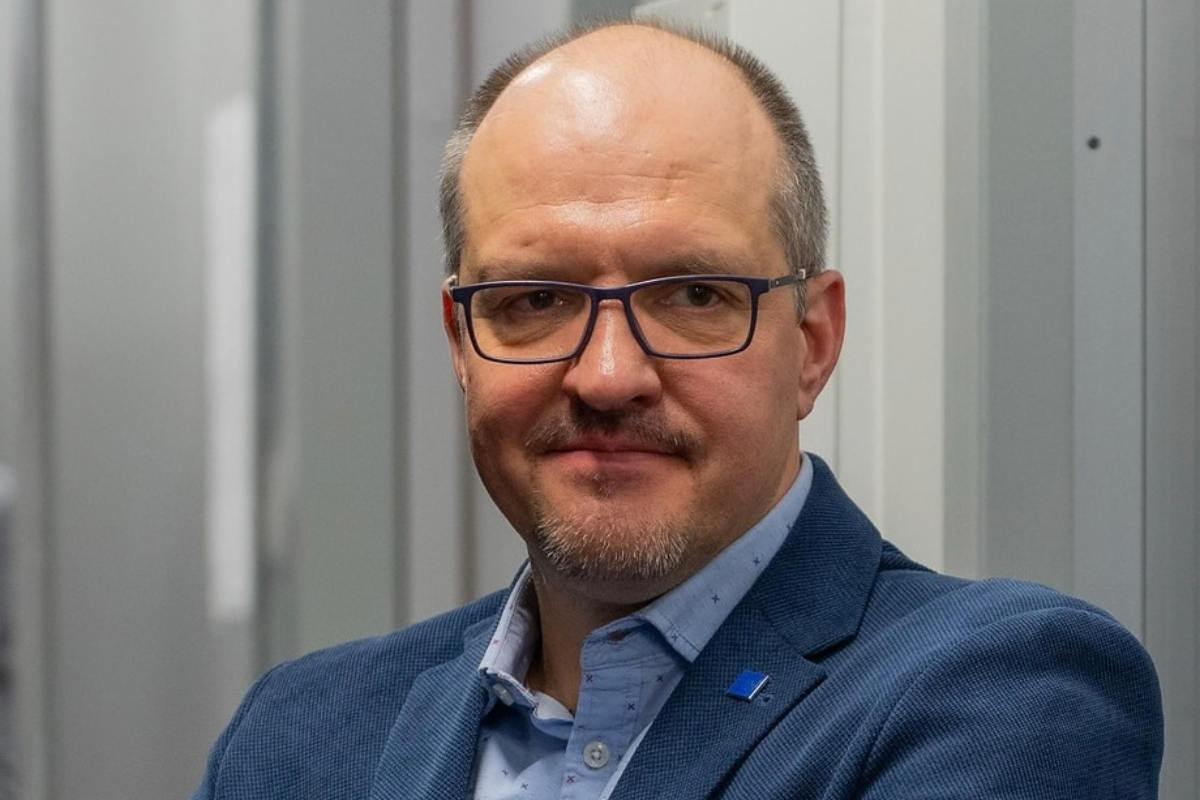
In this interview, project coordinator Toms Torims talks about the importance of the project for European competitiveness, how the technologies being developed could change the face of the accelerator landscape, and why he is excited to finally see the physical creation of ideas that he and many others have worked on for decades.
What are the main challenges that you're trying to address with the Epita project?
EPITA is guided by two significant European roadmaps. The first is the European Strategy for Particle Physics (ESPP), which, in its 2020 update, set out a clear R&D strategy for accelerators. This is one of the main references for EPITA. A fourth update of the ESPP is expected to be finalised this year, and inputs to this have fed into EPITA’s planning.
The second guide for EPITA is the League of European Accelerator-based Photon Sources (LEAPS)’s 2025 Technology Roadmap, which sets out the development of European research infrastructures in photon science for the coming years.
So, the technological challenges we are trying to address are largely set out in these roadmaps.
But looking at the bigger picture, the project is also about European scientific resilience and competitiveness. One challenge is to improve our research infrastructures across Europe, to upgrade them, and to find new technological solutions.
Another important aspect is EPITA’s close links to industry. There are 17 industry partners in the project’s consortium, around 40%. I don’t think this has ever been the case for a CERN-coordinated project of this size before. It shows that we, as a scientific community, are supporting Europe’s businesses and helping to reaffirm the continent’s competitiveness.
Tell me about the industrial partners you are working with.
They are European high-tech companies working in a broad spectrum of areas, from electronics, to materials, to additive manufacturing. Some of the partners are medium-sized, and some are very small enterprises that are really agile. The companies are really focused on technical solutions, or hardware. There is very little in the project related to simulations or IT tools or even artificial intelligence. We have in the project the goal to create 22 new technology prototypes, and in each work package there is an industry partner that will support the development of these prototypes.
Tell me more about these prototypes.
So, these 22 prototypes are in line with the roadmaps mentioned before. They are all technologies that will help to improve the performance and sustainability of our research infrastructures.
The prototypes cover a wide range from cryomodules, to single-cell cavities, to plasma-based beam bending devices, to high-temperature superconducting technologies…It would be unfair to just pick out a few as they are all important!
What are you most excited about when it comes to technological developments happening in the accelerator field right now?
What’s happening now is that we are moving up the development stages, or technology readiness levels, of a lot of different technologies. So, EPITA is based on a legacy of predecessor projects, from I.FAST to ARIES, so these technologies have come a long way and been built up during those projects from the initial idea. Now, with EPITA, we’ll get to see the real thing, on the table in front of us through these prototypes.
For an engineer or an accelerator physicist this is wonderful, to see how these ideas that you came up with collectively and named together, they actually become real. This is exciting.
Of course, some of them will not work, but that’s the nature of science. But we will get to see what does and doesn’t work, and that’s great.
Some of the technologies, like the ones related to laser-driven acceleration or this light-weight silicon carbide laser mirror, if they are successful, could change the way we operate completely at accelerator labs around Europe. The impact could be huge.
Could you tell me about some of the novelties of the EPITA project compared to its predecessors?
One interesting aspect is that some of our deliverables will be managed by industry partners, meaning that, for example, a direct result of the project will be the creation of a new production line. This is very different, but it shows you how the EPITA project is directly contributing to European industry and competitiveness.
Another is that we now have financing for the Accelerator Science and Technology Industry Permanent Forum (AIPF). The AIPF was established in 2023 to act as a bridge between industry and research institutions, ensuring that both worlds align to meet societal needs and drive technological progress. So this financing will help support that work, which is extremely important.
Finally, in the project there is a specific task set up to collaborate with medical doctors to get their input on designing accelerator technologies for medical purposes. Usually, it is engineers and accelerator physicists providing the medical industry with technologies and they just have to take it. For the first time, we will ask a pool or medical professionals what they think, and what they need, and this is hugely important.